Tattoo Linework Explained
Tattoo linework affects how a tattoo looks and how it ages. Learn why line thickness, spacing, and technique matter for long-term clarity. tattoo linework • tattoo line thickness • fine line tattoos • bold line tattoos • tattoo line longevity
DESIGN & LONGEVITY
V. Shiva
4/3/20262 min read

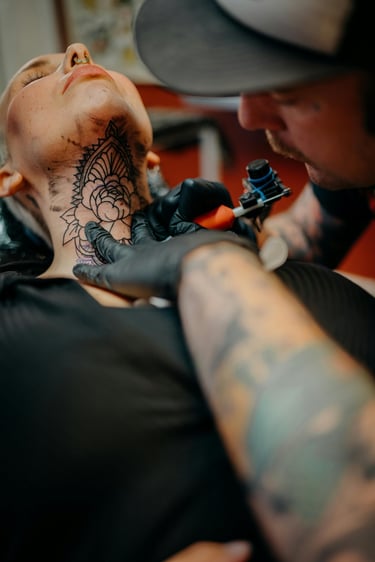
Linework is the foundation of many tattoo styles. Even tattoos filled with colour or shading rely on strong lines to define shapes and structure.
Understanding how linework functions helps explain why some tattoos remain clear for decades while others lose definition much sooner.
What Linework Does in a Tattoo
Lines create structure.
They define shapes, separate elements, and guide the viewer’s eye through the design. Without clear linework, tattoos can quickly become difficult to read as the skin ages.
Good linework acts like the framework of a building—it supports everything else.
Fine Line vs Bold Line Tattoos
Fine line tattoos have become increasingly popular because of their delicate appearance. While they can look elegant when fresh, extremely thin lines require careful planning to maintain visibility over time.
Bold line tattoos, on the other hand, tend to hold their structure longer because the lines have more visual weight.
Neither approach is inherently better. The key is matching the line style to the design and placement.
Why Line Thickness Matters
Line thickness affects how well a tattoo survives the natural aging process.
Very thin lines may soften or fade more quickly. Slightly thicker lines are better able to withstand small amounts of pigment spread within the skin.
Experienced artists adjust line thickness depending on the complexity of the design and where the tattoo will be placed.
Spacing Between Lines
Just as important as line thickness is the spacing between lines.
When multiple lines are placed too close together, they can merge over time as the skin settles. Adequate spacing keeps shapes readable and prevents visual clutter later on.
This is why some designs are simplified during the planning stage.
Linework and Tattoo Longevity
Longevity is one of the main reasons professional artists emphasise linework.
Strong, well-planned lines help tattoos maintain their identity even as colours fade slightly or shading softens. When the structure remains intact, the tattoo continues to make sense visually.
Final Thought
Linework is more than a stylistic choice—it is a structural decision that affects how a tattoo ages.
Understanding the role of lines, spacing, and design balance leads to tattoos that remain clear and readable long after the initial session.
Planning a Tattoo?
If you are considering a tattoo and want a design that fits your body, skin tone, and ages well, the first step is proper design planning.
This step allows time to discuss design direction, placement, scale, and flow, while addressing questions that are often overlooked when decisions are rushed. The goal is not just to create a tattoo that looks good today, but one that continues to make sense years from now.
If you’re serious about getting a tattoo that feels intentional and well thought out, start with a consultation.
© 2026 Tattoo Temple 108. All rights reserved.
Illustrative Realism & Neo Traditional Tattoos.
15+ years of expert artistry in India.
Newsletter
Mumbai, India